Case Studies

Case Studies

Selected examples of strategy-to-execution work. Each case follows one logic: clarify KPI model, build execution system, and measure impact.

Case method

Clarify KPIs->Build system->Measure impact

Outcome progression

Case 1 - Multi-location franchise scaling & KPI governance (QSR)

Client / Context

Large QSR franchise network (hundreds of locations).

Problem

Growth at scale creates chaos: inconsistent execution, unclear ownership, and weak visibility into what drives performance.

What I did

  • Defined KPI structure and leadership cadence (weekly performance reviews, clear ownership).
  • Built scalable funnel management: lead flow -> partner acquisition -> conversion monitoring.
  • Standardized marketing execution across locations to keep brand and growth consistent.

Impact snapshot

Network scale890 -> 1,457
Execution consistencyimproved
EBITDA trajectoryuplift

Signal trend

Outcome: Network scaled from ~890 to ~1,457 locations with measurable efficiency gains including EBITDA uplift.
multi-location governanceexecution cadencescalable funnelreporting

Case 2 - Operational transformation across HQ teams (service network)

Client / Context

Multi-location service business with HQ functions and many locations.

Problem

Departments operate in silos; decisions are not measurable; reporting is fragmented; execution is not owned.

What I did

  • Introduced KPI governance with targets, owners, SLA-style expectations, and review rhythm.
  • Standardized cross-functional workflows (sales/marketing/audit/IT/creative).
  • Implemented unit economics models (CAC/LTV/ROMI) and budget governance.

Impact snapshot

Cross-team alignmenthigher
Visibilityleadership-ready
Execution predictabilityup

Signal trend

Outcome: Improved predictability of execution, increased management visibility, and created a measurable operating system for HQ and locations.

transformationoperationsgovernanceunit economics

Case 3 - Revenue-per-outlet uplift through standardization

Client / Context

Large multi-location network (hundreds of outlets).

Problem

Different formats and inconsistent execution reduce performance and brand clarity.

What I did

  • Standardized format playbooks: how outlets should operate, look, and communicate.
  • Built rollout plan and quality control across locations (vendors, materials, compliance).
  • Introduced reporting and performance comparisons by location.

Impact snapshot

Revenue per outlet+22.3%
Format complianceup
Brand claritystronger

Signal trend

Outcome: Average revenue per outlet increased by +22.3% after standardization efforts.

standardizationrollout governancemulti-location control

Case 4 - Funnel & unit economics turnaround (service business)

Client / Context

Service business with lead generation and sales conversion challenges.

Problem

Marketing spend does not translate into predictable revenue; CAC is high; LTV underperforms.

What I did

  • Rebuilt funnel tracking and conversion stages; set SLA for lead handling.
  • Implemented unit economics model and performance budgeting.
  • Established weekly reporting cadence with action planning.

Impact snapshot

CAC-22%
LTV+12%
Revenue predictabilityup

Signal trend

Outcome: Reduced CAC (example: -22%) and increased LTV (example: +12%) through better funnel execution and economics discipline.

unit economicsfunnel opsreporting cadencebudgeting

Case 5 - Growth without increasing budget (clinic / services)

Client / Context

Clinic/service provider with fixed marketing budget.

Problem

Need revenue growth without increasing spend; performance drivers are unclear.

What I did

  • Focused on conversion and upsell system: service bundles, scripts, retention mechanisms.
  • Standardized performance reporting and weekly execution routine.
  • Introduced clear metrics for new customers, upsell, and repeat rate.

Impact snapshot

Marketing budgetflat
New customersup
Revenueup

Signal trend

Outcome: Revenue growth achieved without budget increase (new customers up, additional services up, revenue up).

conversion optimizationretention/upsellperformance routines

Case 6 - Executive operating rhythm (cross-functional)

Client / Context

Leadership team needing operational control.

Problem

Too many initiatives, low accountability, and decisions not reflected in execution.

What I did

  • Built operating rhythm: KPI dashboard, weekly review, action register, follow-up.
  • Created prioritization system: initiatives -> owners -> deadlines -> measurable outcomes.
  • Introduced templates for decision logs and post-implementation review.

Impact snapshot

Decision speedfaster
Ownership clarityhigher
Execution follow-throughup

Signal trend

Outcome: Faster decision-to-execution cycle; improved clarity of ownership; fewer meetings without progress.

operating rhythmgovernanceexecution discipline

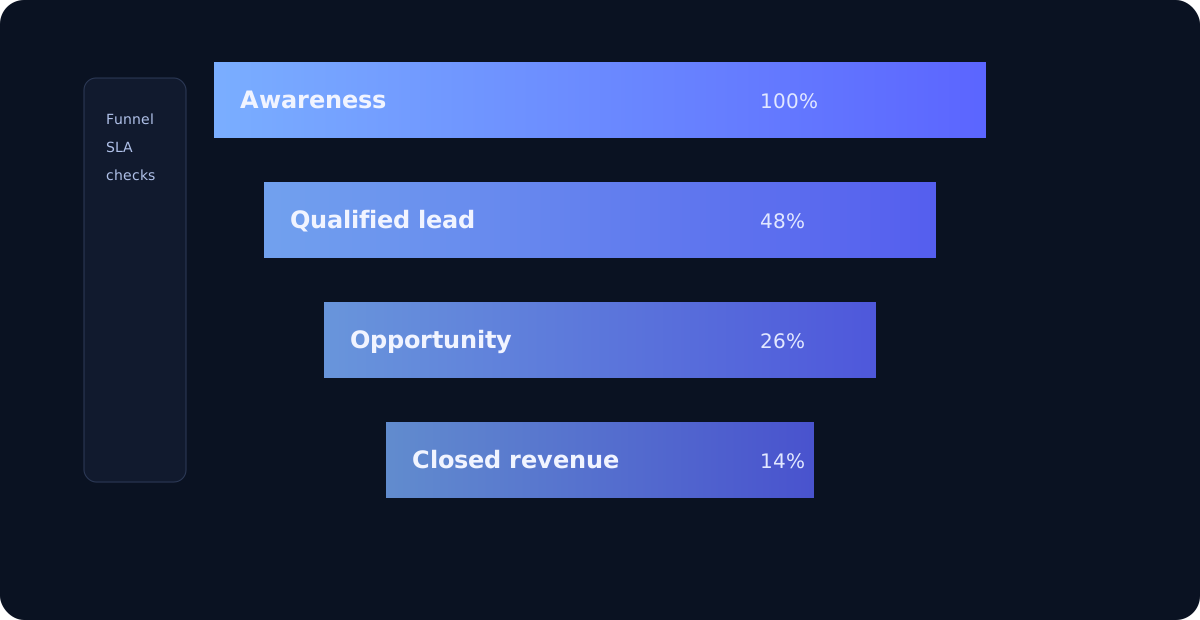
Funnel economics infographic

Want full references for these cases?

I can share a tailored breakdown with context, implementation steps, and KPI snapshots relevant to your business model.