The challenge
A restaurant group needs its own environment, data and connections, with room for continued development.
Hospitality · independent deployment
A restaurant group needs its own environment, data and connections, with room for continued development.
White-label deployment of the application, databases, update workers and supporting services. Syrve integration configuration, location-level data and architecture and operating documentation.
A dedicated dashboard with its own database, connected sources and operating guides. Code rights and support are defined in the licence agreement.
What was built
We prepared a client-branded REST deployment on the client's server, with its own databases and service configuration. Delivery includes the application and the supporting infrastructure for data updates, automation and continued operation.
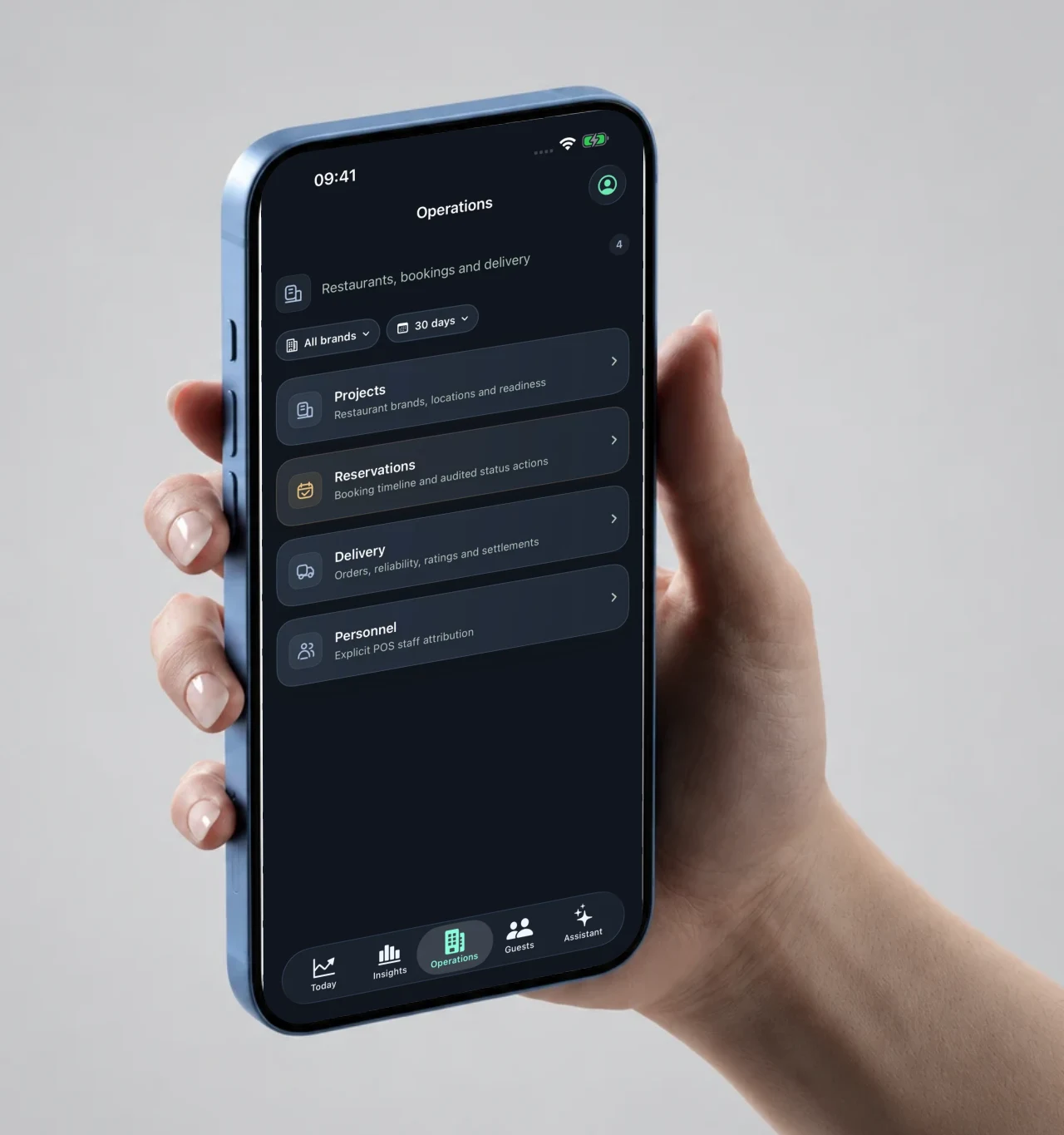
We configured data retrieval from Syrve and location-level reporting. Filters connect widgets and tables to the selected project and venue. Documentation covers the code, services and operation so the client can continue developing the instance within the licence terms.
White-Label Deployment & Handover / URBAN
The client needed a restaurant operating platform under its own brand and within its own infrastructure.
Deliver a restaurant system that the client can operate in its own environment under its own brand.
ProjectscopeLocationLocationsourceSyrve dataDeploymentconfigurationServiceThe delivery includes a client-branded REST application, dedicated databases and service configuration on the client’s infrastructure.
Syrve configuration and project/location filters accompany operational documentation. Licence and support scope remain defined in the agreement.
Reuse the REST product with dedicated services, databases and client configuration. This separates client operations while retaining the existing platform’s domain workflows.
Syrve setup and project/location filters define the agreed source scope. Deployment configuration and operating documentation support handover; licence and ongoing support are governed separately.
Confirmed client-branded REST deployment, dedicated database/service configuration, Syrve setup and handover documentation. Internal infrastructure details remain under NDA.
Some project data is protected by NDA. Restricted internal screens and figures are omitted; the diagrams show the scope that can be shared publicly.
A client-branded REST deployment with dedicated infrastructure, Syrve configuration and project/location filters.
Client-branded system delivery · infrastructure, REST configuration and handover
The contribution is client configuration, infrastructure delivery and handover of REST. Product reuse is explicit; uptime commitments and intellectual-property terms are not inferred from this case.
Related solutions

Connect customers, tasks, operations and data in one workspace. Start with processes and responsibilities, then define the features.
Explore the details
I automate enquiries, documents and reports. An AI assistant helps find information and handle recurring tasks.
Explore the details
Connect sales, customers, marketing spend and locations. Move from a changing metric to the records that explain it.
Explore the detailsWhere to start
Where to start
Restaurants, hospitality groups and teams managing several locations.
Scope agreed before we start.
Discuss my project
Tell me what your business does and what you want to change. We will work out the first step.